2024 Boating Classes
Practical On-the-Water Training, 5 hours
Practical on the Water Training is the perfect combination of classroom training and hands-on on-the-water training. It provides an explanation of how your boat handles and why. Video clips visualize the maneuvers prior to your practicing them on the water. Includes: use of lines; departing the dock; operating in a fairway; pivoting; anchoring; backing; docking; steering, including a slalom course; holding course on a range, quick stop and simulated man-over-board recovery.Location: Norwalk Veteran's Park Boat Ramp, 42 Seaview Ave, Norwalk, CT
Members $190 per person, Non-members $290 includes 1 yr membership
REGISTER HERE for Saturday May 18, 2024, 9:00 AM
REGISTER HERE for Saturday June 2, 2024, 9:00 AM
Get Your Connecticut Safe Boating Certificate Spring 2024
America's Boating Course,8 hours
America's Boating Course teaches boating safety. Topics include types of
boats; life jackets; fire extinguishers; distress signals; operator
responsibilities; boating laws and regulations; fueling; boating courtesy;
basic rules of navigation; buoys; sound signals; navigation lights, shapes,
and sounds; boat registration; and environmental rules.
Students qualify for CT's Safe Boating Certificate.
Location: STAR, Inc., 182 Wolfpit Ave., Norwalk, CT (Note: In Person Registration begins at 8:30 AM)
$80 per person, $20 for additional family member sharing textbook
REGISTER HERE for Saturday April 13, 2024, 9:00 AM
REGISTER HERE for Saturday May 11, 2024, 9:00 AM
Additional classes may be added so please check back or join our email list from the home page to receive notifications.
ALL NSPS classes are open to members and non-members alike.
Scroll down further for more course descriptions
Scroll down further for more course descriptions


STUDENT INFORMATION
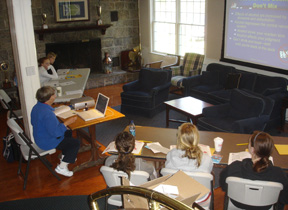
NSPS classes are AFFORDABLE, CLOSE-BY, INFORMATIVE, AND FUN! Where can you go to fulfill your boating dream with or without a boat? If you think boating is your thing, come take a course with us. Share your experiences with others and learn more about boating.
We've been in Norwalk since 1935 and still going strong, so we must be doing something right. The national organization, USPS, has some 40,000 members in 450 squadrons across the country. It is America's largest nonprofit boating organization with excellent, updated course materials incoporating the latest technology into its curiculum.
AFFORDABLE, CLOSE-BY, INFORMATIVE, AND FUN!
Let's take a closer look at the course offerings. We'll start with . . .
America's Boating Course, 3rd Edition
The state of Connecticut requires passing a classroom course before the mandated Boating Certificate can be issued. America’s Boating Course, 3rd Edition, meets all CT requirements. In addition to the 244-page, full-color ABC3 textbook, materials include two bonus computer disks. The home-study Courseware CD utilizes guided instruction and numerous video and audio clips. The second disk contains navigation software—Rose Point Navigation Systems’ Coastal Explorer Viewer Edition—and the entire library of NOAA’s raster navigation charts. America’s Boating Course emphasizes boating safety. Among the topics covered are: types of boats; life jackets; fire extinguishers; distress signals; operator responsibilities; boating laws and regulations; fueling; boating courtesy; basic rules of navigation; buoys; sound signals; navigation lights, shapes, and sounds; boat registration; and environmental considerations. This course exposes the tip of the iceberg of boating knowledge, creating an awareness of the know–how needed to skipper a boat safely and earning the successful student the credentials needed to qualify for the state-mandated Connecticut Safe Boating Certificate. (Note: The nav software will run on a PC or a Mac with Windows.)
Get Your Connecticut SAFE BOATING CERTIFICATE
Contact our Education Officer Karl Wagner for classes.
Email: education@americasboatingclubofnorwalk dot org
Phone: (203) 274-5550

Please note: The State of Connecticut requires
8 HOURS OF CLASSROOM INSTRUCTION for
America's Boating Course to qualify for the required Connecticut Safe Boating Certificate.
USPS ADVANCED COURSES, ELECTIVES, SEMINARS, & GUIDES
The USPS Advanced level courses, open to members and non-members alike in the Norwalk Sail & Power Squadron, are a series
of in-depth courses covering the general topics of Seamanship, Piloting,
Advanced Piloting, Celestial Navigation 1 ("Junior"), and Celestial Navigation 2
(Senior). Although they may nominally be taken in any order, each course builds upon the previous course. As each course is completed
successfully, a member would be entitled to add that grade abbreviation after his or her name (e.g., Jane Doe, AP).
The Electives are in-depth courses covering areas of interest to all boaters. Seminars are two-hour courses that can also be taken independently. Guides are exclusively for independent study. Seminar and Guide texts can be purchased through the USPS Ship's Store (see website address on Line 2 of the table below) or at some retail marine stores.
Click on the titles below to see a course description.
Advanced Courses
Seamanship |
Marine Navigation |
Advanced Marine Navigation |
Offshore Navigation |
Celestial Navigation
Elective Courses
Cruise Planning |
Weather |
Engine Maintenance |
Marine Electronics |
Instructor Development |
Sail
Public Seminars
These seminars are available now:
Advanced Powerboat Handling, Anchoring, Basic Coastal Navigation, Basic Weather and Forecasting, Boat Handling under Power, Boating on Rivers, Locks and Lakes, Crossing Borders, Emergencies on Board, Fuel and Boating, How to Use a Chart, Hurricanes and Boats, Knots, Bends and Hitches, Man Overboard, Marine RADAR, Mariner's Compass, Mastering the Rules of the Road, Paddle Smart, Partner in Command, Practical On The Water Training, Sail Trim and Rig Tuning, Tides and Currents, Trailering Your Boat, Using GPS, Using VHF and VHF/DSC Marine Radio
To locate seminars near you, see the United States Power Squadrons website
here.
Guides
These items may be used in United States Power Squadrons® classroom courses and seminars or for home study:
Basic Plotting Guide, Boat Insurance, The Boatowner's Guide to GMDSS and Marine Radio, How to Fly Flags, Knots, Bends and Hitches for Mariners, Knot Tying: The Basic Knots CD, Marine Amateur Radio, Mariner's Compass Guide, Navigational Astronomy, Plotting and Labeling Standards, Predicted Log Guide, Sailing, Introduction to Sight Reduction Methods, USPS Nautical Glossary, Water Sports
For more information or to make a purchase go to the United States Power Squadrons website
here.
ADVANCED COURSES
Five Advanced Grade courses are offered by USPS. They are designed to be taken in sequence because each builds on skills taught in the previous course.
Seamanship
Building on the basics taught in America’s Boating Course, Seamanship is the recommended first course for both power boaters and sailors. Students learn practical marlinespike, navigation rules, hull design and performance, responsibilities of the skipper, boat care, operating a boat under normal and abnormal conditions, what to do in various emergencies and weather conditions, nautical customs and common courtesy on the water. This course provides a needed introduction to the USPS Educational Program and a strong foundation for students going on to other Advanced Grades courses and/or Cruise Planning or Sail.
<back to top>
Marine Navigation (Piloting)
Piloting is the first of the advanced navigational classes focusing on techniques for piloting a boat in coastal and inland conditions. The course emphasizes planning and checking along with the use of GPS for determining position, and introduces digital charting along with traditional charting, compass and dead reckoning skills. Plotting, labeling, use of the compass, aids to navigation and a host of related topics are included in this all–new approach to coastal and inland piloting.>
<back to top>
Advanced Marine Navigation (Advanced Piloting)
Advanced Piloting is the final part of the inland and coastal navigation series. This material continues to build on the base developed in Piloting and includes practical use of additional electronic navigation systems and other advanced techniques for finding position. Among topics covered are: finding position using bearings and angles, collision avoidance using GPS and RADAR, what to do when the electronics fail, tides, currents and wind and their effect on piloting, and electronic navigation with GPS, chart plotters, RADAR, autopilots, etc. Application of course lectures takes place through practical in-class and at-home exercises.
<back to top>
Offshore Navigation (Junior Navigation)
Junior Navigation is the first of a two-part program of study in offshore (open coast) navigation. It is designed as a practical, how-to course using GPS for offshore navigation with sun sight-taking using a sextant as a backup technique. The more advanced techniques for other celestial bodies and sights are for study in the subsequent Navigation Course. JN subject matter includes: basic concepts of celestial navigation; how to use the mariner’s sextant to take sights of the sun; the importance and techniques of accurate time determination; use of the Nautical Almanac; how to reduce sights to establish lines of position (LOPs); and the use of GPS, special charts, plotting sheets and other navigational data for offshore positioning and passage planning.
<back to top>
Celestial Navigation (Navigation)
This is the second part of the study of offshore navigation. It further develops the student’s skills and understanding of celestial theory. The student is introduced to additional sight reduction techniques for bodies other than the sun. The student develops greater skill and precision in sight taking, positioning and the orderly methods of carrying on the day’s work of a navigator at sea. Of particular interest and importance is the navigation software that is explained and used in practices for planning and navigating in the offshore environment with the included software. Offshore navigation using minimal data and⁄or equipment, such as when on a disabled vessel or lifeboat is also studied.
<back to top>
ELECTIVE COURSES
Six Electives are offered. They cover separate and independent topics and therefore may be taken in any order according to a person's interests and time.
Cruise Planning
There is something very special about the thrill of cruising in new waters and the sense of accomplishment upon completing an extended cruise. To go beyond what most boaters do on a weekend overnight or even a week or so marina hopping requires boaters to leave their normal cruising areas and comfort zones. The Cruise Planning course focuses on the planning and preparation necessary for safe, enjoyable, extended cruises on both inland and coastal waters.
Designed for boaters who cruise on either a sail or powerboat (owned or chartered), this course covers general cruise preparation and planning, boat and equipment, anchors and anchoring, security, chartering, cruising outside the US, crew and provisioning, voyage management, communications, navigation, weather, and emergencies.
<back to top>
Weather
The safety and comfort of those who venture out-on-the water have always been weather dependent. In this course students will become keener observers of the weather, but weather observations only have meaning in the context of the basic principles of meteorology — the science of the atmosphere.
The course focuses on how weather systems form, behave, move, and interact with one another and reflects the availability of all sorts of weather reports and forecasts on the Internet. It is a general weather course benefiting those sitting in their living rooms, as much as those standing behind the helm. Each student receives:
*
a Weather Manual – USPS Weather – an explanatory text with full color photographs and drawings covering weather in the United States and its coastal and inland waters;
* a set of three Daily Weather Maps – learning aids with a compete explanation of map symbols designed to develop weather map reading and analysis skills; and
* NOAA’s Sky Watcher Chart – a reference to assist in identifying cloud types – helpful indicators of approaching weather.
<back to top>
Engine Maintenance
The Engine Maintenance course stresses the diagnosis of modern systems, while also teaching the basics of engine layout and operation. Gasoline inboards, outboards, and diesel engines are taught in a way that reinforces the common aspects of how engines work. Modern engines offer high reliability and good performance through the use of computerized systems for fuel delivery and engine timing. Most of these systems are “black boxes” that can no longer be serviced by weekend mechanics with ordinary tools. The EM course covers those repairs that do-it-yourselfers can still perform, teaches how to diagnose problems that might be beyond your ability to fix, and how to share information with your mechanic so the right repairs get performed. The course also covers basic mechanical systems such as drive systems (propellers), steering systems, and engine controls. The last chapter discusses solutions you might use to solve problems that could occur while afloat and away from a repair facility. Gasoline, diesel, and outboard engines are treated independently in this chapter
<back to top>
Marine Electronics
Electronic devices for the recreational boater have come a long, long way over the years. With the advent of solid state digital electronics, sophisticated sensors and radios have become commonplace on our vessels. EMSCom has split Marine Electronics into three new standalone “systems” courses. Marine Electrical Systems, Marine Communications Systems, and
Marine Navigation Systems.
The first of these three courses, Marine Electrical Systems (MES) covers the practice of wiring your boat, including boat electrical wiring practices and diagrams, direct and alternating current power, galvanic and stray current corrosion, and lightning protection. Troubleshooting is emphasized throughout, so students should feel comfortable performing even tricky wiring tasks after passing this course.
Marine Communications Systems (MCS) delves into radio waves and transmitters, receivers and transceivers, antennas and transmission lines, FCC Rules and Regulations, FCC Frequency Plan, marine radiotelephone operating procedures, and other communication services including Emergency Position Indicating Radio Beacon (EPIRB), Digital Selective Calling (DSC), Global Maritime Distress and Safety System (GMDSS), satellite communications, amateur radio, and more.
Marine Navigation Systems (MNS) covers all aspects of electronic navigation using GMDSS as the foundation for modern marine communications. GPS is taught as the primary method of position fixing, and LORAN will be covered only as a historic sidebar topic. This will be a systems course—not “how to” navigate—that focuses on the use of electronic devices to augment the practice of safe navigation on the water. Topics include GPS, the Automatic Identification System (AIS), RADAR, depth sounder and related instruments, electronic charting systems, and a working understanding of the electronic bus structures needed to tie these devices together.
The third part (MNS) has been delayed due to the committee’s decision to rewrite the course in response to squadron feedback.
Recognizing that these new systems are very complex, we will work diligently to soften the course presentation to focus on use rather than technical descriptions of the devices. We are also working to include software emulators of some devices for classroom use. These tasks have put us behind schedule in production of the new course.
(04 Feb 15)
<back to top>
Instructor Development
This course is exclusively for members who would like to become instructors for their squadron. Unlike other USPS courses, the Instructor Development course is not designed to enhance boating skills. Rather, its emphasis is on enhancing instructor skills. The course has been designed to demonstrate interactive teaching methods focused on adult learning. Students are required to prepare lesson plans and give four presentations to their peers utilizing a variety of teaching aids and presentation skills. Each presentation is to be given on a topic from one of the public boating classes with the intent that upon completion of the course every student will be qualified to teach or proctor America's Boating Course.
<back to top>
Sail
The Sail course was designed to serve the needs of the novice and experienced sailor, as well as the non-sailor, for basic skills and knowledge.
The course starts with basic sailboat designs and nomenclature, rigging, safety, and sail processes and then tackles the physical
aspects of sailing forces and techniques, sail applications, marlinespike, helmsmanship and handling of more difficult sailing
conditions, navigation rules, and an introduction to heavy weather sailing. Appendices provide an introduction to sailboat racing
and sailing in Canadian waters.
<back to top>
For additional information, see the USPS (AKA America's Boating Club) website here